
Audubon & Beyond: 5 Places in the US to Buy Masterful Scientific Illustrations
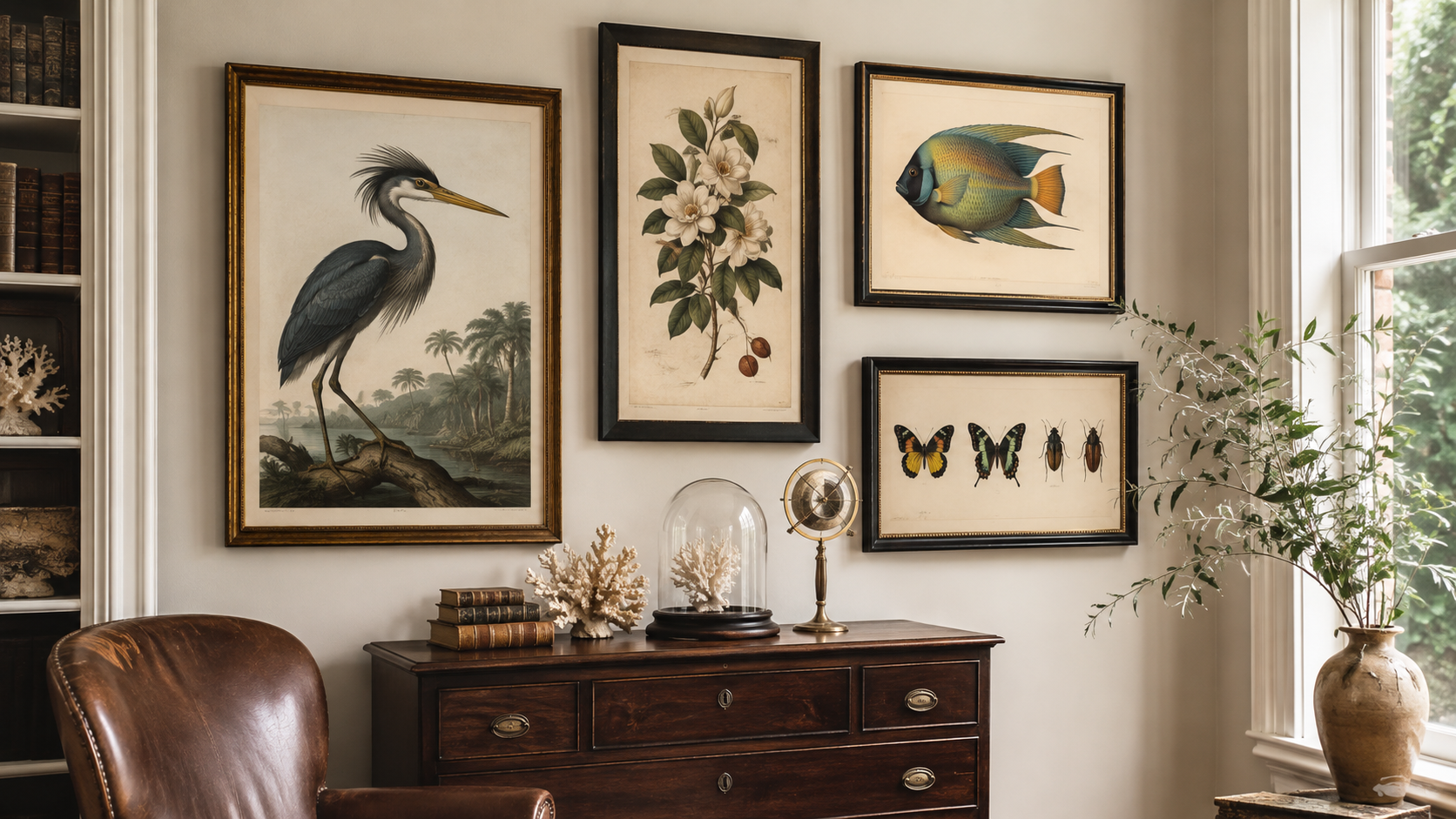
Hanging a piece of scientific history on a wall completely changes the energy of a room. Early naturalists didn’t just paint birds and botanicals to make things look pretty. They documented a wild, undiscovered world. The precision required to capture the exact scale of a heron or the intricate veins of a newly discovered orchid is mind-boggling.
Finding authentic pieces or high-quality restored prints requires knowing exactly where to look. The market is flooded with cheap, pixelated knockoffs. True scientific illustration demands respect. It requires archival materials, proper inks, and a deep understanding of the original medium. Here are the top locations prioritizing quality and historical accuracy.
Classic Prints Gallery
Digital restoration is an art form itself. Classic Prints Gallery tackles this process brilliantly. They take some of the earliest scientific illustrations of the natural world and carefully restore them for authentic color and clarity. Think about the works of John James Audubon or the Italian botanist Giorgio Gallesio. Time fades ink. Paper yellows. This gallery brings those original vibrant tones back to life.
These vintage illustrations carry a very specific mood. The vivid reds of a botanical strawberry or the intricate scales of a tropical fish require exact color matching. Classic Prints Gallery handles this process digitally but treats the outcome like traditional fine art.
They also solve a major headache for buyers. Framing. Instead of shipping a rolled-up print that sits in a cardboard tube for six months, they offer frames hand-assembled by expert craftspeople right in Portland, Oregon. The curation here is incredibly thoughtful. Buyers get access to Marcus Elieser Bloch’s fascinating 18th-century fish illustrations without needing a museum budget. It’s a seamless way to bring serious historical artwork into a modern space.
Joel Oppenheimer Gallery
Step into this Chicago institution and the dedication to natural history art is immediately obvious. Joel Oppenheimer Gallery is not just a retail space. It’s a premier conservation lab. They specialize in original hand-colored engravings and lithographs from the golden age of natural history.
Collectors flock here for pristine original Audubon folios and works by John Gould or Pierre-Joseph Redouté. But the real magic happens behind the scenes. Their museum-grade conservation framing ensures a 200-year-old piece of paper survives another century. They use rag mats and UV-filtering acrylics to stop degradation in its tracks. Buying from Oppenheimer means investing in a piece of preserved history. The staff knows every detail about the printing techniques used in the 1800s. Ask them about aquatint engraving and prepare for a fascinating education.
Arader Galleries
Scale matters. Arader Galleries operates locations in New York and Philadelphia with an inventory that borders on the unbelievable. They hold one of the largest collections of natural history works in the world. Walking through their space feels like wandering through a private archive of the 16th to 19th centuries.
While some collectors spend decades hunting down vintage maps or old photographs, natural history buffs come to Arader for sheer volume and pedigree. They deal in absolute masterpieces. If someone wants a complete original Havell edition of Audubon’s Birds of America, this is the first place to call. The pricing reflects the extreme rarity of the collection. Still, browsing their catalog provides a masterclass in how humanity originally documented flora and fauna. The sheer physical size of the original copper plate engravings leaves a lasting impression.
Panteek
Sometimes the hunt requires a highly specific botanical or animal subject. Panteek offers a massive online inventory of antique prints categorized with extreme precision. Need a specific fern from a 1790 botanical journal? Panteek probably has it.
This Florida-based operation focuses entirely on authentic antique prints rather than modern reproductions. The charm lies in the imperfections. A slightly uneven hand-painted watercolor wash from 1850 shows the human touch of the original colorist. They stock everything from tiny entomology prints featuring jewel-toned beetles to large-scale botanical studies. Navigating their site feels like digging through the flat files of a dusty bookshop, but with the convenience of modern shipping. Their pricing structure is also incredibly fair for genuine antiques. A beautiful, authentic 19th-century butterfly engraving often costs less than a nice dinner.
John James Audubon Center at Mill Grove
For a direct link to the legend himself, look toward Pennsylvania. The John James Audubon Center at Mill Grove sits on the actual estate where Audubon lived and observed local wildlife. His time on this property sparked the obsession that eventually became his life’s work.
The museum shop offers a unique buying opportunity. They sell high-quality, authorized reproductions of his famous bird studies. Buying here does something entirely different than purchasing from a private dealer. The revenue directly funds the conservation efforts and educational programs of the Audubon Society. It puts money right back into protecting the very bird species depicted on the paper. The prints capture the dynamic, often dramatic poses Audubon was famous for. A heron striking a fish. A hawk mid-dive. These aren’t stiff, lifeless profiles. They are action shots from the 19th century.